The Administrative Burden on UK Gas Engineers — and Why Virtual Support Is Becoming Essential
For first class professional & administrative support for your business
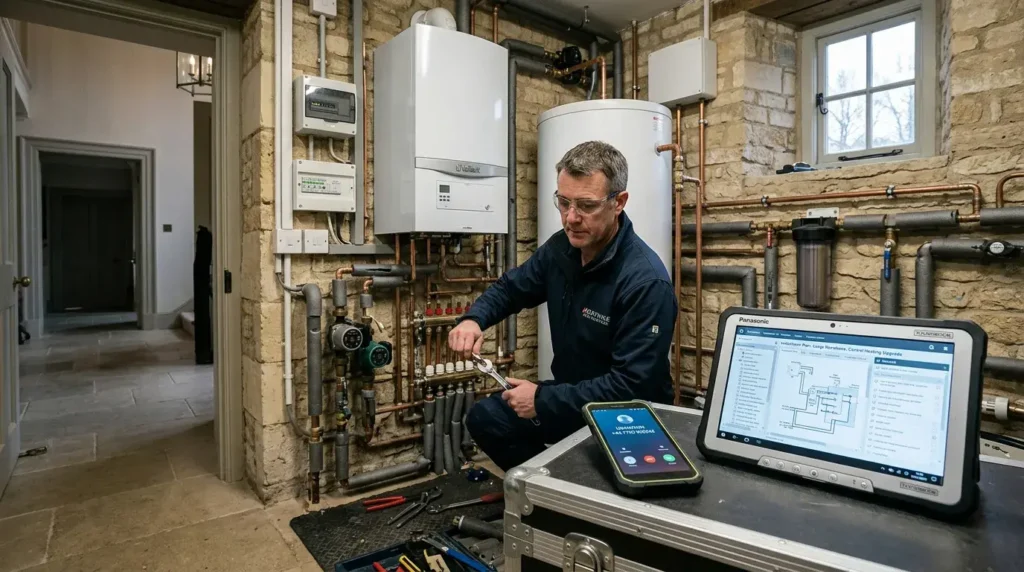
Across the UK, gas engineers and heating installers form the backbone of residential and commercial property maintenance.
From boiler installations and servicing to issuing Gas Safety Certificates (CP12), their work is both highly technical and tightly regulated under Gas Safe requirements. Yet while the industry is built on precision and compliance, the day-to-day reality for many engineers is increasingly defined by something far less specialised: administration.
Behind every completed boiler service or central heating installation sits a growing volume of paperwork, scheduling pressure, and customer communication. For sole traders and small Gas Safe registered businesses in particular, these administrative demands are no longer peripheral—they are consuming a substantial portion of the working week and directly impacting profitability.
A Trade Built for the Field, Not the Office
Most UK gas engineers operate as independent professionals or within small teams. Their training is rooted in safety, diagnostics, and installation—not office management. However, running a modern heating or plumbing business requires far more than technical skill. Engineers are expected to manage bookings, respond to enquiries, produce quotes, issue invoices, maintain compliance records, and ensure timely communication with customers.
This creates an operational imbalance. Time that should be spent on-site—installing boilers, servicing heating systems, or carrying out landlord gas safety checks—is instead diverted into non-billable administrative work. In many cases, this work is pushed into evenings and weekends, extending the working day well beyond standard hours.
Compliance Is Non-Negotiable—But Time-Intensive
The regulatory environment adds another layer of complexity. Gas Safe compliance requires accurate documentation for every job, whether it’s a routine boiler service or a full installation. CP12 certificates, service records, and installation reports must be completed, stored, and often shared with customers or landlords.
While essential, these processes generate no direct income. They are necessary for legal and safety reasons, yet they contribute significantly to the administrative workload. Many engineers still rely on a mix of paper records, PDFs, and disconnected digital tools, which increases the time required to manage documentation and raises the risk of errors or misplaced records.
The Hidden Cost of Delayed Quotes and Invoices
One of the less visible but most financially damaging issues in the trade is the delay between completing a job and handling the associated admin. After a day spent on-site, it is not uncommon for engineers to return home and begin preparing quotes or invoices late in the evening.
This lag has real consequences. A delayed quote can mean a lost installation job, particularly in a competitive market where customers expect rapid responses. Similarly, invoicing delays slow down the payment cycle, affecting cash flow and creating additional work in the form of payment chasing.
For many heating engineers, the issue is not a lack of demand—it is the inability to process opportunities quickly enough due to administrative bottlenecks.
Constant Interruptions on the Job
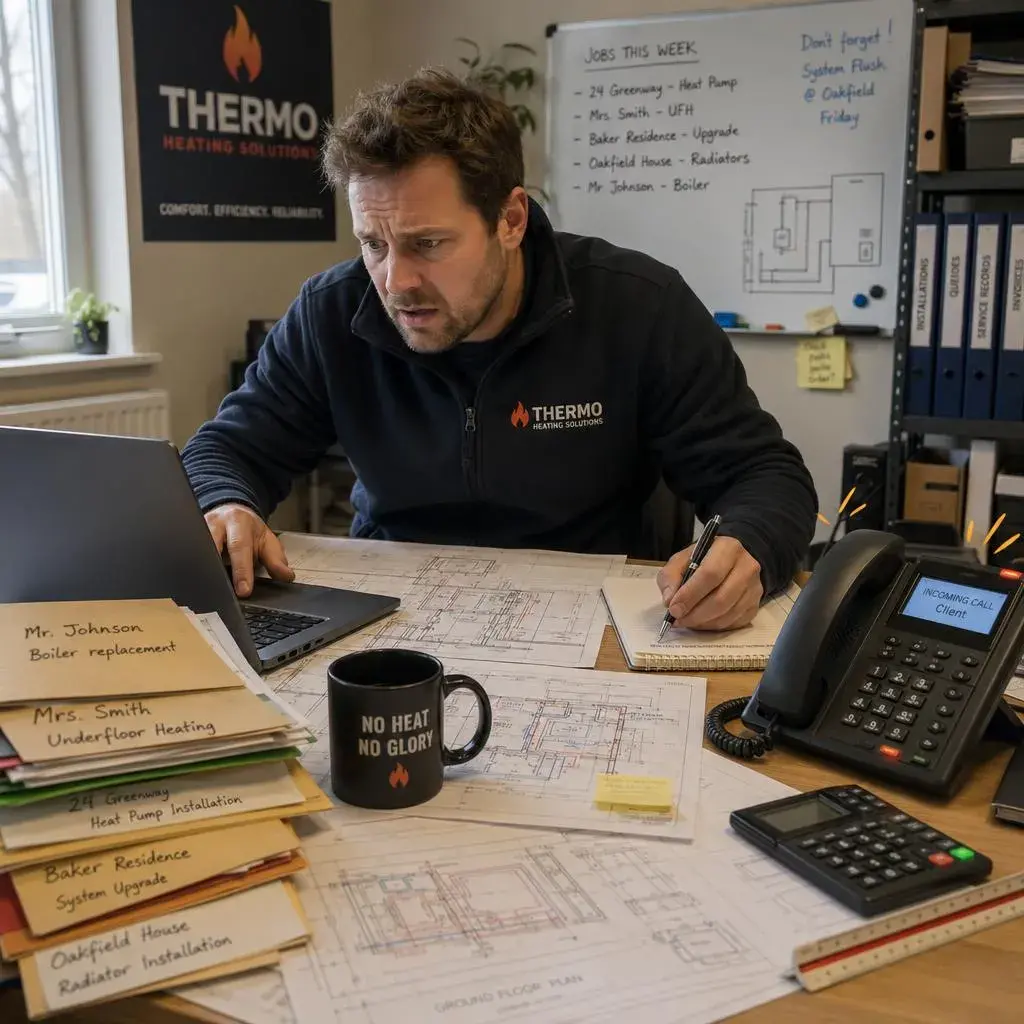
The nature of the trade also makes focused work difficult. Engineers are frequently interrupted during jobs by incoming calls, messages, and booking requests. A customer calling about a boiler breakdown or a landlord requesting a gas safety check cannot simply be ignored, yet answering these calls mid-task disrupts workflow and extends job duration.
Over time, these interruptions reduce efficiency and contribute to longer working days. Missed calls can also translate directly into lost business, particularly when customers move on to the next available engineer.
Fragmented Systems and Lost Information
In many small gas engineering businesses, information is spread across multiple channels—text messages, WhatsApp conversations, emails, handwritten notes, and spreadsheets. Customer details, job histories, and compliance records are rarely centralised.
This fragmentation leads to time lost searching for information, repeated communication with customers, and occasional errors. In an industry where accuracy is critical, particularly when dealing with safety documentation, disorganisation is more than an inconvenience—it is a liability.
A Growing Constraint on Growth
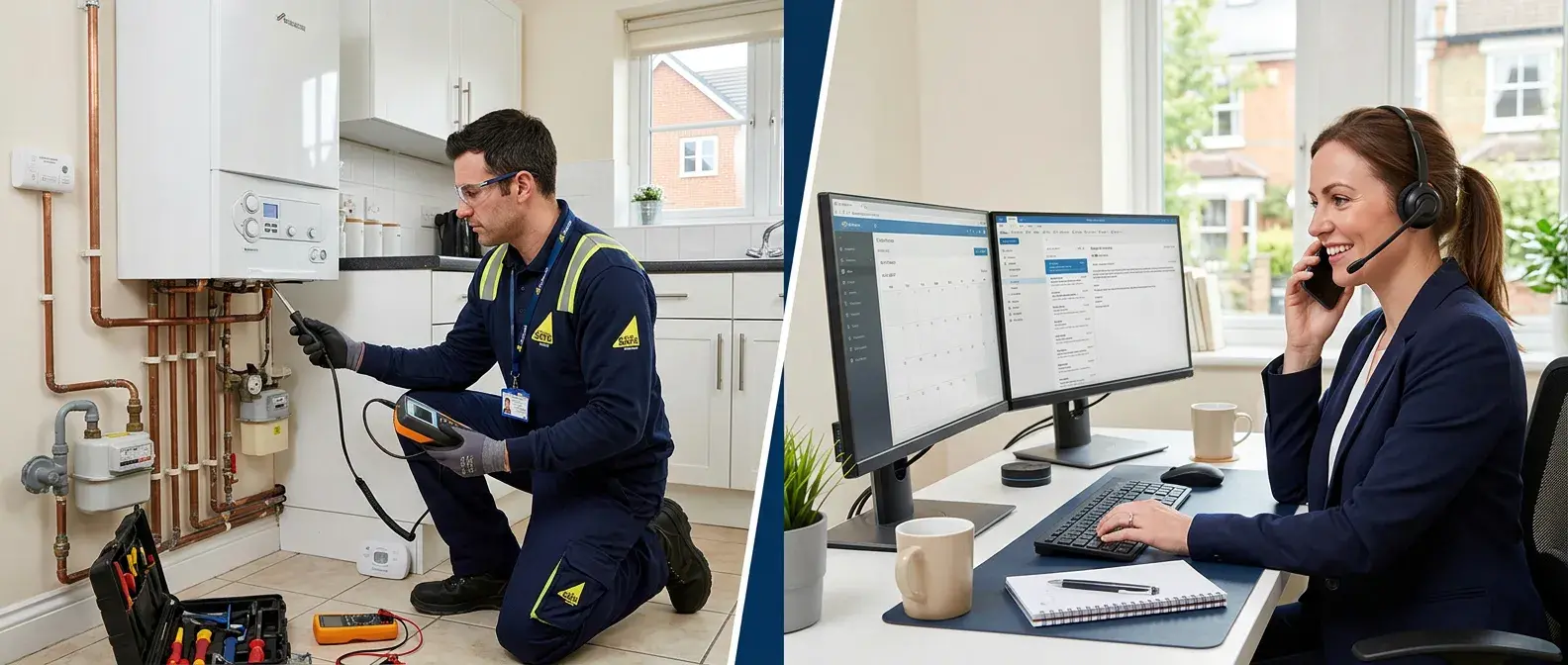
As demand for boiler installations, servicing, and heating system upgrades continues across the UK, many engineers find themselves unable to scale their businesses. The limitation is not technical capacity but operational bandwidth. When the same individual is responsible for both fieldwork and administration, growth becomes difficult to sustain.
Taking on more work often means taking on more admin, which reinforces the cycle. Without structural support, the business remains dependent on the availability of its owner.
The Shift Towards Virtual Administrative Support
In response to these challenges, a growing number of gas engineers are turning to Virtual Personal Assistants (VPAs) to manage the administrative side of their operations. Unlike software platforms alone, which still require input and oversight, a VPA actively handles tasks such as scheduling, customer communication, invoicing, and document management.
This shift reflects a broader recognition within the trade: that administrative work, while necessary, does not need to be performed by the engineer themselves.
A Virtual PA can manage incoming calls, book jobs into a structured calendar, and ensure that customer enquiries are handled promptly. Quotes can be prepared and sent on the same day, improving conversion rates, while invoices can be issued immediately after job completion, reducing delays in payment.
At the same time, compliance documentation—whether CP12 certificates or service records—can be organised, stored, and distributed efficiently, ensuring that nothing is overlooked.
Reclaiming Billable Time
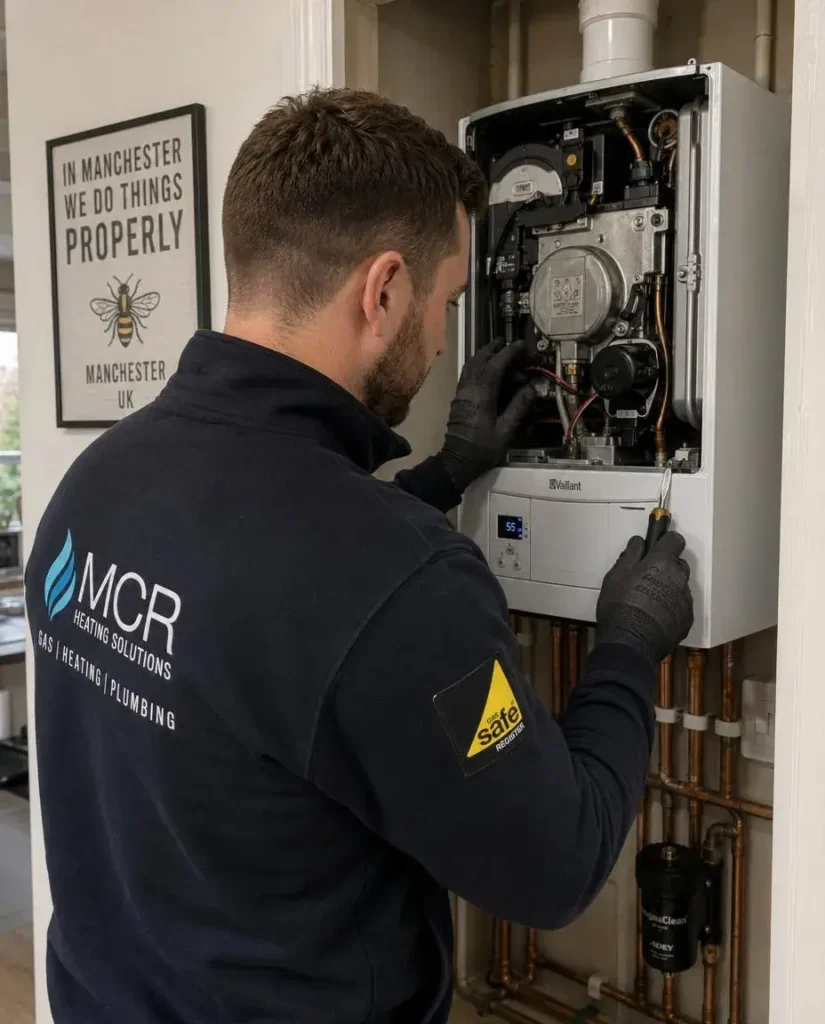
The most immediate impact of outsourcing administrative work is the recovery of billable hours. Time previously spent on paperwork, phone calls, and follow-ups can be redirected towards on-site work, where revenue is generated.
This is not simply a matter of convenience. For many engineers, reclaiming even a few hours per week can translate into additional jobs completed, improved cash flow, and reduced stress. Over time, it also creates the foundation for business growth, as the operational bottleneck is removed.
A More Sustainable Way to Operate
The UK gas engineering sector is not short of demand. From routine boiler servicing to urgent breakdown repairs and full heating installations, the need for qualified professionals remains strong. The challenge lies in managing that demand efficiently without overextending the individual.
By separating technical work from administrative responsibility, Virtual PAs offer a more sustainable operating model. Engineers remain focused on their expertise—installation, maintenance, and safety—while administrative processes are handled with consistency and speed.
Conclusion
Administrative overload has become one of the most significant, yet least discussed, challenges facing gas engineers in the UK. It affects not only productivity and cash flow but also work-life balance and long-term business potential.
As the industry continues to evolve, the adoption of virtual support is emerging as a practical solution. For Gas Safe registered engineers looking to streamline operations, improve responsiveness, and maximise billable time, a Virtual Personal Assistant is no longer a luxury—it is a strategic necessity.
Our most recent posts
Virtual PA Services offers a wealth of useful information related to its services. We have prepared several articles that might help you to make the right decision when it comes to hiring a Virtual PA.

Going to CHS? Don't Bring Your Admin Problems With You
Heading to CHS Manchester? Whether you’re attending to discover new suppliers or exhibiting to meet potential clients, the value of…

Why Surveyors Need Virtual PA Support: Managing Calls, Appointments and Reports
Surveying is rarely a desk-based profession. Whether you are carrying out a building inspection, valuing a property, measuring land, advising…

The True Cost of Missed Calls for UK Dental Practices
For a busy dental practice, a missed call can seem insignificant. The receptionist may be helping a patient, taking a…