

Going to CHS? Don't Bring Your Admin Problems With You
Before CHS: Get the admin out of the way The best time to start delegating isn't when you're already overwhelmed. It's before the event.…
Read article →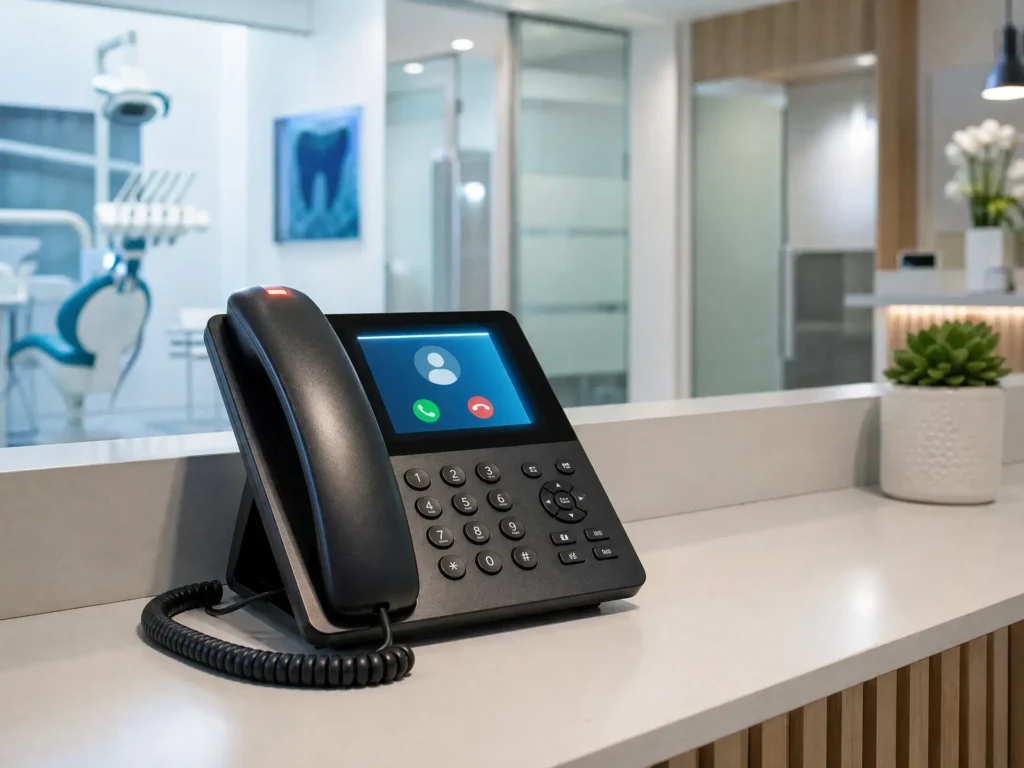
The receptionist may be helping a patient, taking a payment or dealing with another telephone enquiry. The dentist may be with a patient. By the time someone is available to answer, the caller has already hung up.
But what if that caller was a potential new patient?
Or someone enquiring about a high-value treatment?
Or an existing patient trying to rearrange an appointment?
A missed call can mean much more than a missed conversation. It can mean lost revenue, wasted diary capacity and a poorer patient experience.
And there is another part of the equation that is often overlooked: appointment follow-up.
Getting the patient into the diary is only the first step. Practices also need to manage confirmations, cancellations, rearrangements and follow-up to keep appointments from becoming empty slots.
Dental reception teams have a lot to deal with.
They may be answering calls while simultaneously:
When several things happen at once, someone inevitably has to wait.
And sometimes that means the telephone rings unanswered.
This isn't necessarily a problem with your reception team. It is often a capacity problem.
Even the most efficient receptionist cannot answer the telephone while helping a patient standing in front of them.
Consider a potential new patient who has found your practice online.
They are ready to book.
They call your number.
Nobody answers.
They may leave a message and wait for a call back. But they may also try another dental practice that answers immediately.
That first appointment could have been the beginning of a long-term patient relationship.
Depending on the treatment required, a new patient could subsequently book:
The value of a new patient therefore extends well beyond their first appointment.
How many potential patients are you losing simply because nobody was available when they called?
You may not know — and that's precisely the problem.

Useful categories to monitor include:
| Call type | Potential impact |
|---|---|
| New-patient enquiry | Potential new revenue |
| Treatment enquiry | Potential high-value treatment |
| Emergency enquiry | Immediate patient need |
| Appointment change | Diary management |
| Cancellation | Potential lost appointment |
| Routine query | Administrative workload |
The objective isn't to treat every caller as a sales lead.
It is to make sure that important calls don't disappear simply because your team is busy.
Answering the telephone is only part of the challenge.
Once an appointment has been booked, there is still work to do.
Patients forget appointments. Their circumstances change. They need to rearrange. Sometimes they cancel at short notice.
Effective appointment follow-up gives the practice an opportunity to identify these situations early.
A good process might include:
The earlier a practice knows that an appointment will not go ahead, the more opportunity it has to fill the space.

Imagine a private dental appointment worth £150 is cancelled on the morning of the appointment.
If the practice cannot fill the slot, the opportunity to generate that revenue disappears when the appointment time passes.
But if the cancellation is identified early and a suitable patient from the waiting list can take the appointment, the situation changes completely.
The exact financial impact will vary between practices and appointment types.
The principle, however, is simple:
The earlier you know about a cancellation, the more time you have to do something about it.
That is why appointment follow-up should be viewed as part of effective diary management, not simply another administrative task.
This is where additional support can make a real difference.
A receptionist might be:
Checking in a patient → answering the telephone → taking a payment → dealing with another patient → returning a missed call.
Every interruption creates another opportunity for something to be delayed.
The practice doesn't necessarily need another full-time receptionist.
It may simply need additional capacity at the right times.
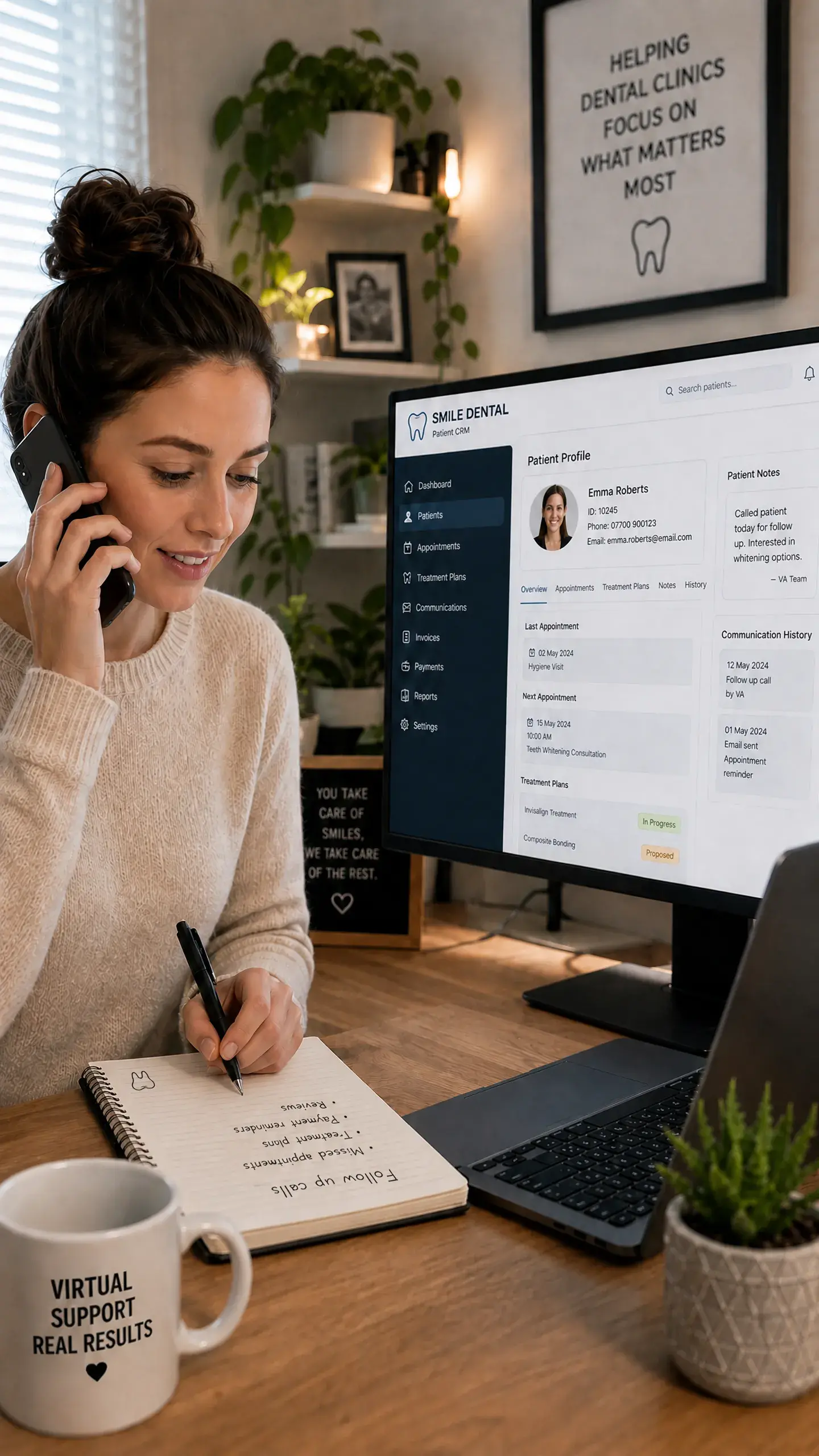
A Virtual PA can work alongside your existing reception team, providing additional telephone and administrative support.
Depending on your requirements and agreed procedures, this could include:
Answering calls
Calls can be answered professionally when your reception team is unavailable.
The Virtual PA can take messages, deal with agreed routine enquiries and ensure important information reaches the appropriate member of your team.
Handling new-patient enquiries
Potential patients can speak to a real person rather than reaching an unanswered telephone.
The Virtual PA can collect the agreed information and arrange the next step according to your practice's procedures.
Managing appointment changes
Bookings, cancellations and rearrangements can be handled according to agreed processes, reducing the pressure on your reception team.
Appointment follow-up
Patients who require additional contact can be followed up according to your agreed procedures.
Helping fill cancelled appointments
When an appointment becomes available, the Virtual PA can help contact suitable patients on your waiting list.
Taking messages
Not every call needs to interrupt a dentist or another member of the clinical team.
A clear message can be taken and passed to the right person for action.
If you want to understand the scale of the problem, start measuring it.
Useful figures include:
| Measure | Why it matters |
|---|---|
| Total inbound calls | Shows telephone demand |
| Missed calls | Identifies potential lost opportunities |
| Returned calls | Shows how effectively missed calls are recovered |
| New-patient enquiries | Measures potential new business |
| New-patient bookings | Shows enquiry conversion |
| Cancellations | Shows diary disruption |
| No-shows | Shows lost appointment capacity |
| Cancelled slots refilled | Measures recovery of diary capacity |
You may discover that your biggest problem isn't the number of calls you receive.
It may be what happens after the call.
You can make a simple calculation using your own figures.
For example:
500 calls per month
× 8% missed
= 40 missed calls
If just 25% of those are genuine new-patient or commercially significant enquiries, that's 10 potentially valuable opportunities every month.
The value of those opportunities depends on your conversion rate, treatment mix and the lifetime value of each patient.
Then consider cancelled appointments and no-shows.
Even a small number of unfilled appointment slots each month can represent significant lost capacity.
The important question isn't:
“How much do dental practices lose from missed calls?”
It is:
“How much might our practice be losing?”
For some practices, employing another receptionist will make perfect sense.
For others, a Virtual PA may provide the additional capacity they need without taking on another full-time employee.
| Additional receptionist | Virtual PA | |
|---|---|---|
| Telephone answering | ✓ | ✓ |
| Appointment administration | ✓ | ✓ |
| Patient follow-up | ✓ | ✓ |
| Cancellation follow-up | ✓ | ✓ |
| Additional office space | Usually | No |
| Employment administration | Yes | No |
| Flexible support | Limited | ✓ |
The right solution depends on your practice, your call volume and the level of support you require.

Your reception team can be excellent at what they do and still struggle to answer every call.
Your patients don't see the competing demands behind the scenes.
They simply experience whether someone answers, whether their enquiry is dealt with promptly and whether managing an appointment is easy.
A Virtual PA can provide additional capacity for telephone answering, appointment administration and patient follow-up, working alongside your existing team.
That can mean:
Fewer missed calls.
Better follow-up.
Fewer avoidable gaps in the diary.
More time for your team to focus on patients.
If your practice is struggling to keep up with telephone calls, appointment changes, cancellations or patient follow-up, Virtual PA Services can provide flexible administrative and telephone support tailored to your requirements.
Before CHS: Get the admin out of the way The best time to start delegating isn't when you're already overwhelmed. It's before the event.…
Read article →Surveying is rarely a desk-based profession. Whether you are carrying out a building inspection, valuing a property, measuring land, advising on a commercial lease,…
Read article →Behind every completed boiler service or central heating installation sits a growing volume of paperwork, scheduling pressure, and customer communication. For sole traders and…
Read article →